
Soft or Hard Tooth Flank? The 350 HBW Dividing Line That Decides Gear Material, Heat Treatment and Machining Sequence
The 350 HBW line separates soft from hard gear tooth flanks: below it, 45 steel at 217-255 HBW and 40Cr at 241-286 HBW are quenched and tempered; above it, 20CrMnTi is carburized to 58-62 HRC case with 30-45 HRC core.
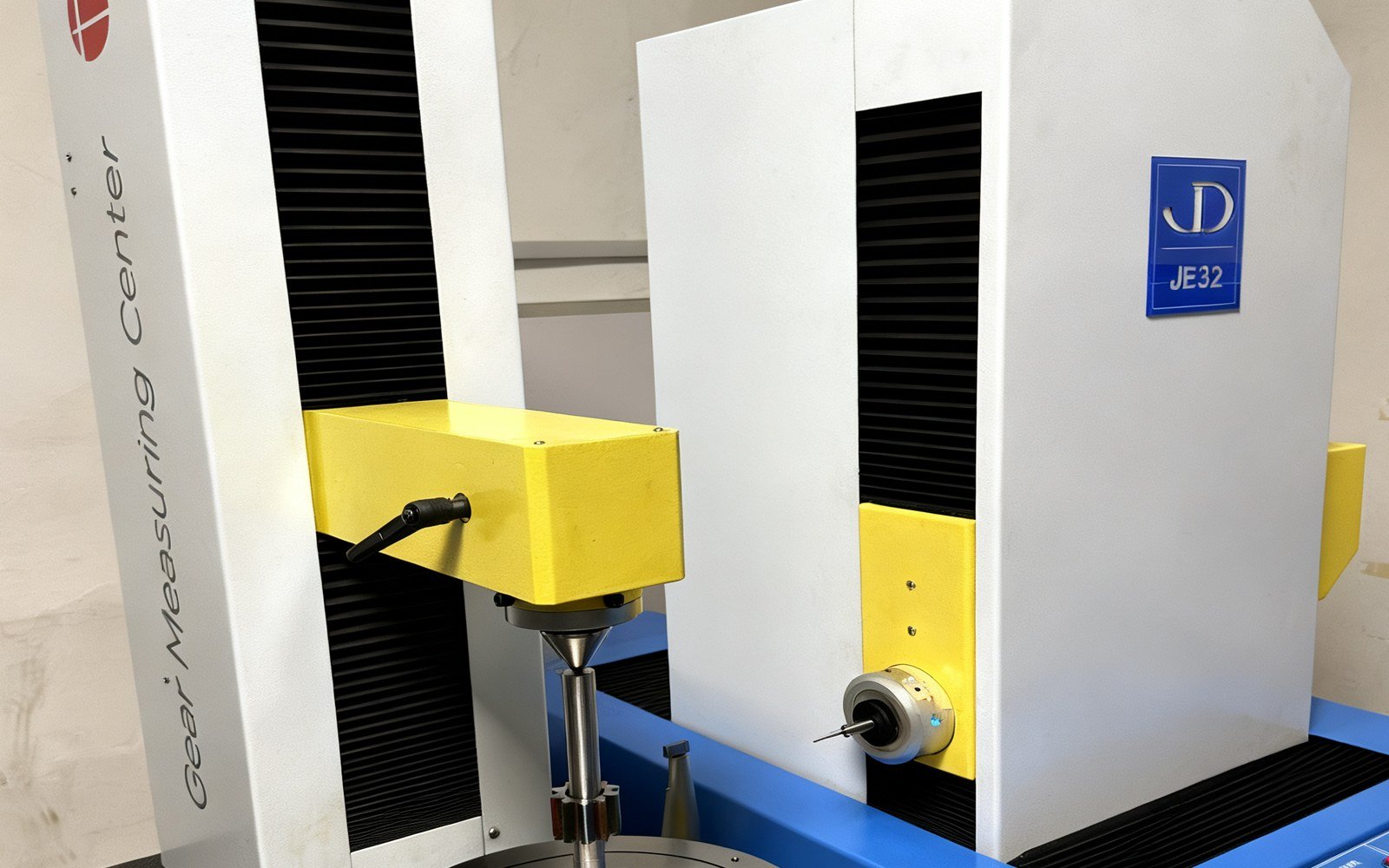
Soft or Hard Tooth Flank? The 350 HBW Dividing Line That Decides Gear Material, Heat Treatment and Machining Sequence
Core answer: when selecting gear materials, first determine the tooth surface hardness, then look at the steel grade. In engineering practice, 350 HBW is taken as the dividing line between soft and hard tooth surfaces — below the line, the quenching and tempering route is used: 45 steel at about 217–255 HBW, 40Cr at about 241–286 HBW, 42CrMo at about 269–302 HBW, with the process sequence being “cut teeth first, heat treat afterwards”, so heat treatment distortion does not affect the already-formed tooth profile, and the cost is low; above the line, carburizing and quenching is used: 20CrMnTi can reach 58–62 HRC at the surface while the core remains at 30–45 HRC, and the sequence is reversed to “heat treat first, grind teeth afterwards”, which involves more operations and higher cost, but under the same load the gear can be made smaller and lighter. 350 HBW is an engineering convention, not a value fixed in any standard; in practice it must be weighed together with speed, load, impact and size constraints.
1. First ask: soft tooth surface or hard tooth surface#
Soft tooth surface gears refer to those with a tooth surface hardness below 350 HBW after quenching and tempering or normalizing. The tooth surface is soft and relies on running-in to improve contact; the process sequence is “cut teeth first, heat treat afterwards”, so heat treatment distortion does not destroy the already-formed tooth profile accuracy, and the cost is low.
Hard tooth surface gears have a tooth surface hardness above 350 HBW (or above 45 HRC). The tooth surface is hard and the load-carrying capacity is strong; under the same load the gear can be smaller and lighter; but the sequence is reversed — heat treat first, then grind teeth — which involves more operations and higher cost.
The 350 HBW line is a commonly used engineering convention in the industry, not a number specified by any standard. What really decides is the speed, the load, whether there is impact, and how much installation space is available.
2. Quick reference of common gear materials and hardness#
| Material | Heat treatment | Tooth surface hardness | Typical use |
|---|---|---|---|
| 45 | Quenching and tempering | 217–255 HBW | Low speed and light load, general gears |
| 40Cr | Quenching and tempering | 241–286 HBW | Medium speed and medium load, machine tools, general-purpose reducers |
| 42CrMo | Quenching and tempering | 269–302 HBW | Large module, heavy load, higher strength required |
| 40Cr | Surface quenching | 45–55 HRC | Medium load, wear resistance required |
| 20CrMnTi | Carburizing and quenching | Surface 58–62 HRC, core 30–45 HRC | High speed and heavy load, with impact (such as automotive transmissions) |
| QT600-3 | As-cast/normalized | 190–270 HBW | Large low-speed gears, integrated housing parts |
The hardness values in the table are common handbook ranges; the final values are subject to the drawing and technical agreement.
3. Why carburizing and quenching gives a “hard surface and tough core”#
Carburizing and quenching involves placing low-carbon steel (carbon content 0.15%–0.25%) in a carbon-rich atmosphere and heating it so that carbon diffuses into the surface, followed by quenching and low-temperature tempering. A single gear then has two personalities at once: the surface carbon content rises to about 0.8%, and after quenching the hardness reaches 58–62 HRC, giving wear resistance and pressure resistance; the core carbon content remains essentially unchanged, with hardness falling at 30–45 HRC, giving high strength and resistance to fracture under impact.
Both Ti and Mn in 20CrMnTi can improve hardenability, so even larger cross-sections can be through-hardened. The effective case depth commonly used for medium-load gears is 0.8–1.5 mm: too shallow, and the hardened layer will collapse under load; too deep, and the cost rises while impact toughness actually decreases.
Carburizing has another incidental benefit: the martensitic transformation at the surface leaves residual compressive stress, so the bending fatigue behavior at the tooth root is more predictable than that of induction-hardened parts of the same hardness. That is why transmissions with impact loads — automobiles, construction machinery — almost all use carburizing steel.
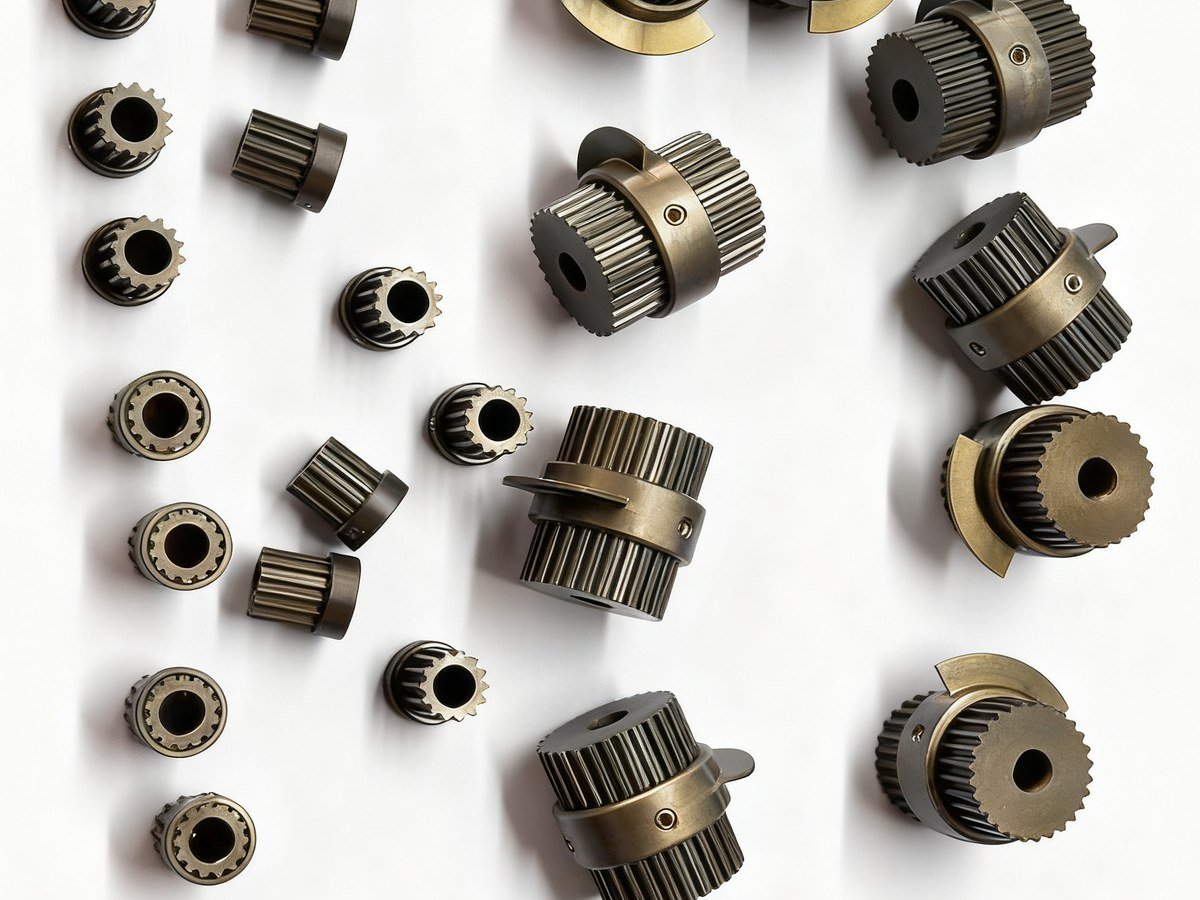
4. A few pitfalls that are easy to fall into#
- A drawing that only states the steel grade and not the hardness is incomplete information. The same 40Cr can go two ways, quenching and tempering or surface quenching, and the tooth surface hardness differs by nearly a factor of two (241–286 HBW versus 45–55 HRC), so the process route, quotation and lead time are completely different.
- Carburized parts need sufficient grinding allowance reserved in advance. The distortion from carburizing and quenching cannot be avoided, and tooth grinding is the final guarantee of accuracy. The grinding allowance for carburized parts is usually larger than for quenched and tempered parts (commonly 0.2–0.3 mm per side for medium module), and the hardened layer must not be ground through.
- For small-batch trial production, do not choose 20CrMnTi right away. The cycle for carburizing plus tooth grinding is measured in weeks; if the load is not large, 40Cr or even quenched and tempered 45 steel is sufficient and costs less. Choosing expensive material is not an achievement; choosing the right one is.
5. Only when the material information is written clearly can the price be discussed clearly#
A qualified gear drawing should state at least three things in the material column: steel grade, heat treatment method, and hardness range. Once these three are defined, there is a basis for discussing the process route and cost — spur and helical cylindrical gears are customized to drawings, machining support covers rough hobbing, finish hobbing, gear shaving and tooth grinding, and heat treatment and inspection capabilities are shown in inspection and quality system .
Send the drawing over — module, number of teeth, accuracy grade, heat treatment requirements, operating conditions — and the engineering team will reply after drawing review with material and heat treatment recommendations, process route and quotation. Contact Geyon Transmission .